
Log In
Don't have an account?
Create an Account
Reset password
OR continue with e-mail and password
OR
Join Tech Job Finder
OR continue with e-mail and password
OR
ESC
Browse
Trending
Company Overview
Company Reviews (0)
Interviews/Assessment Centres (0)
Salaries (0)
Jobs (46)
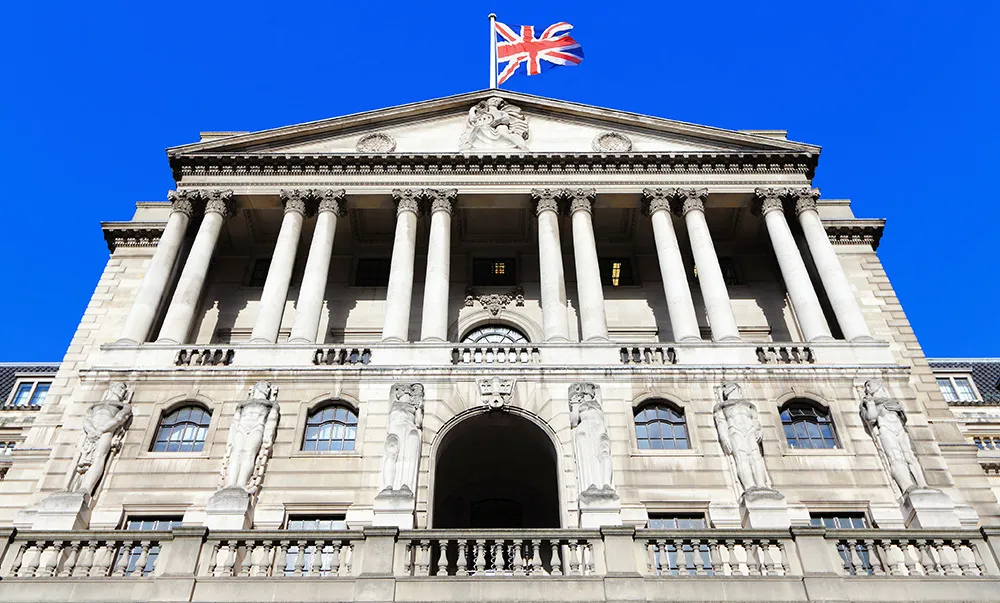
About Bank of England
Recent History
In the past 24 months, the Bank of England has navigated significant economic turbulence, starting with its emergency intervention in the gilt market in September 2022 to stabilize financial markets following the UK government's mini-budget announcement, which caused bond yields to spike dramatically. This action involved purchasing long-dated gilts to restore orderly market conditions, as detailed in reports from the Bank's official announcement. Another key development was the series of interest rate hikes throughout 2023, culminating in the base rate reaching 5.25% by August, the highest level in 15 years, aimed at curbing persistent inflation. In early 2024, the Bank launched a consultation on the design of a potential digital pound, exploring central bank digital currency (CBDC) to modernize payments, as outlined in their technology working paper. Additionally, the Bank has intensified its focus on climate-related financial risks, publishing updated guidance in 2023 for banks and insurers to manage these exposures effectively. These events underscore the Bank's proactive role in maintaining economic stability amid global uncertainties.
Introduction
The Bank of England, established in 1694, serves as the United Kingdom's central bank, overseeing monetary policy, issuing banknotes, and ensuring financial stability across the economy. Currently positioned as a pivotal institution in a post-Brexit landscape, it manages the UK's gold reserves and acts as the lender of last resort to commercial banks. With over 4,000 employees, the Bank collaborates closely with the UK Treasury and international bodies like the International Monetary Fund to influence global financial norms. Its current strategy emphasizes resilience against economic shocks, including inflation control and support for sustainable growth. The Bank's independence in setting interest rates, granted in 1997, allows it to make data-driven decisions free from direct political interference. For young professionals, it offers a unique blend of public service and cutting-edge financial expertise, making it an attractive employer in the evolving world of central banking.
Tech department
The Bank of England's technology division boasts competitive advantages through its advanced use of data analytics and machine learning for economic forecasting and risk assessment, enabling more accurate monetary policy decisions. It employs sophisticated software platforms for real-time financial surveillance, including custom-built systems for monitoring payment infrastructures and cybersecurity threats. The central banking industry is well-positioned for innovation, particularly with initiatives like CBDCs and AI-driven modeling, where the Bank is a leader in exploring blockchain for secure digital transactions. Reputation-wise, the Bank's tech roles are praised for strong career development opportunities, including rotational programs and access to cutting-edge research, though salaries average around £50,000-£80,000 for mid-level positions, competitive within the public sector but below private fintech giants. Professionals benefit from collaborations with tech firms on projects like FinTech research, fostering skills in emerging technologies. Overall, it's seen as a stable environment for tech innovation with a focus on societal impact.
The business side
One major weakness for the Bank of England is its bureaucratic structure, which can slow decision-making and innovation compared to agile private sector competitors. Opportunities abound in digital transformation, such as developing a retail CBDC to enhance payment efficiency and financial inclusion, potentially positioning the UK as a leader in digital finance. Threats include geopolitical uncertainties, like ongoing effects from the Ukraine conflict on energy prices, which complicate inflation management. Competition comes from other central banks, such as the European Central Bank, which may advance faster in areas like green finance integration. Additionally, the rise of private fintech firms like Revolut challenges traditional banking models that the Bank regulates. Main challenges involve balancing independence with government expectations, especially during economic downturns, as highlighted in analyses from Financial Times reports on policy tensions.

Applications
© 2026 Tech Job Finder. All Rights Reserved.



Applications
© 2026 Tech Job Finder. All Rights Reserved.