
OpenAI signs a massive 20-year Ohio data-center agreement
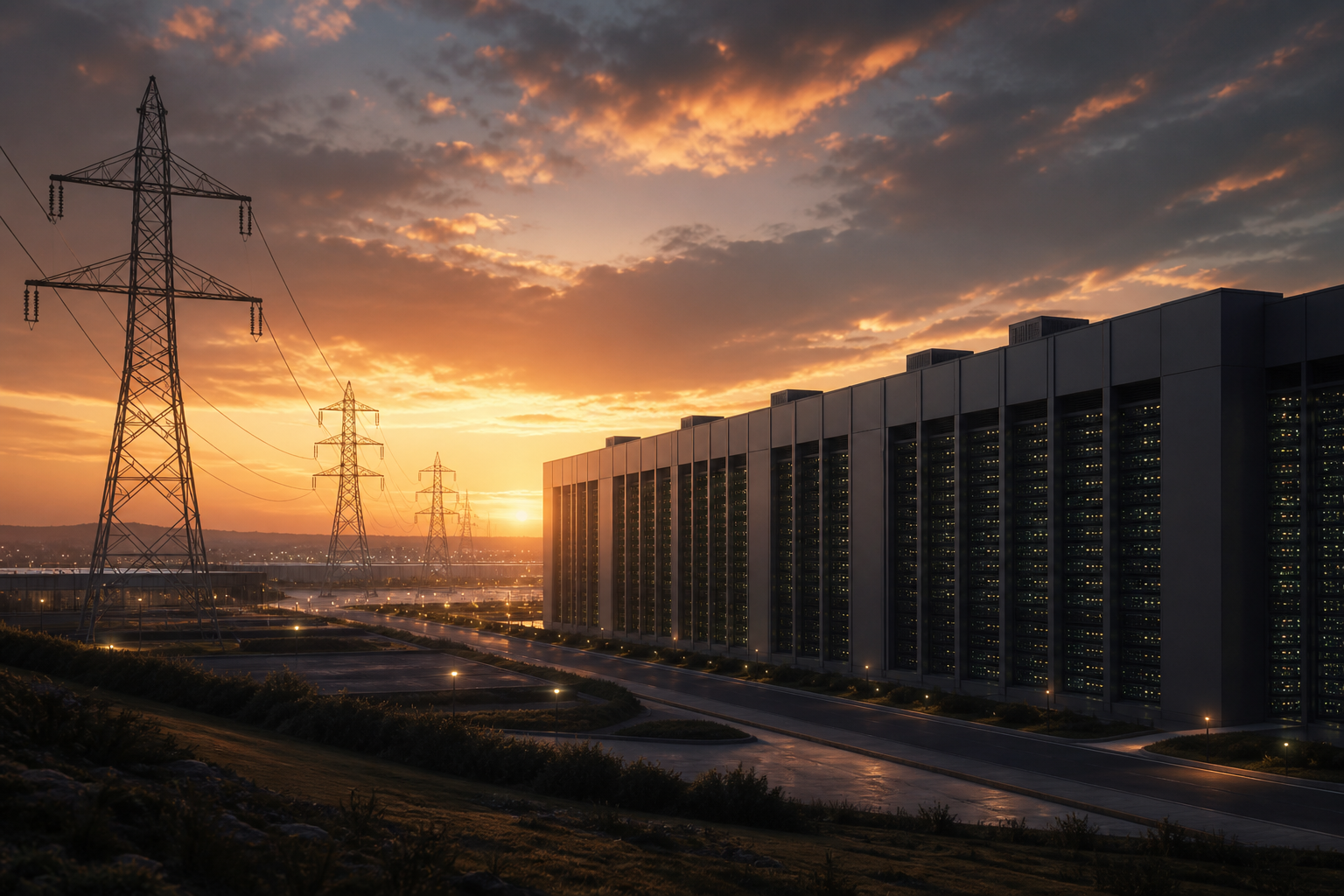
The agreement centers on the PORTS-Pike campus and commits OpenAI to a two-decade term covering approximately 8 IT-gigawatts. That figure represents an order of magnitude larger than most existing single-site AI training clusters. The lease structure spreads payments across twenty years, which changes how the company can plan capital expenditures for successive generations of models.
Parties and Their Roles
OpenAI is the primary lessee and will direct workloads across the capacity. Nvidia supplies the underlying hardware stack and systems integration. SB Energy acts as the campus developer and receives a $1.5 billion equity commitment from Nvidia to accelerate construction and grid interconnection work. These roles separate compute procurement from power-plant and substation development, allowing each party to focus on its core expertise.
Power and Infrastructure Requirements
Eight IT-gigawatts of usable compute load requires substantial behind-the-meter generation and transmission upgrades. The campus must support high-density racks while maintaining uptime targets that frontier training runs demand. Because the term spans two decades, planners can stage additional generation assets in phases rather than front-loading every megawatt. This staged approach reduces immediate strain on regional transmission operators while still delivering the full capacity by the later years of the contract.
Why the Announcement Resonated
The sheer size of the reservation revived questions about whether capital spending on AI infrastructure can continue at this pace. Analysts have noted that power procurement now rivals chip purchases as the binding constraint on scaling. The twenty-year horizon also forces companies to model long-term electricity price curves and regulatory risk in ways shorter leases never required. Software engineers evaluating future training runs must now incorporate power availability timelines into their project roadmaps.
Electricity Demand Debate
Frontier model training already consumes hundreds of megawatts for weeks at a time. Scaling to multiple simultaneous runs at gigawatt levels raises concerns about grid stability and carbon intensity. The PORTS-Pike site is intended to pair compute with new generation, yet the exact mix of sources remains under discussion. Operators must weigh the cost of firm power against the performance penalties of throttling jobs during peak grid stress. For teams running reinforcement learning or synthetic data generation, predictable power delivery directly affects iteration speed.
Economic Implications for Frontier Models
Amortizing an eight-gigawatt facility over twenty years alters the unit economics of each training run. Fixed lease costs become a larger fraction of total spend, which favors organizations that can keep accelerators utilized near continuously. Smaller labs or startups may find it harder to secure slices of such capacity, potentially widening the gap between well-funded labs and the rest of the ecosystem. At the same time, the long-term reservation reduces the risk of sudden capacity shortages that have previously delayed model releases.
Reactions Across the Industry
Cloud providers and chip designers have watched the deal closely because it sets a precedent for how power contracts are structured. Energy developers see an opportunity to finance new generation assets backed by a single large offtaker. Regulators in Ohio are evaluating interconnection queues and local economic benefits. Within OpenAI itself, infrastructure teams now face the task of mapping model architectures and parallelism strategies onto a campus that will grow in stages rather than appear fully formed.
Technical Considerations for Engineers
Software teams planning workloads for the new capacity must account for variable latency across different phases of campus build-out. Job schedulers will need to handle power capping events gracefully. Data movement between older clusters and the new site will require careful network topology planning. These operational details matter as much as raw FLOPS when determining how quickly new capabilities can be tested and shipped.
Looking Ahead
The PORTS-Pike agreement signals that power procurement will remain a central strategic function for any organization pursuing frontier-scale AI. Future deals are likely to include similar long-duration leases paired with direct generation investments. For the broader engineering community, the lesson is that hardware roadmaps now extend beyond silicon to include transformers, substations, and generation assets. Teams that internalize these constraints early will be better positioned to deliver reliable training throughput over the coming decade.



