
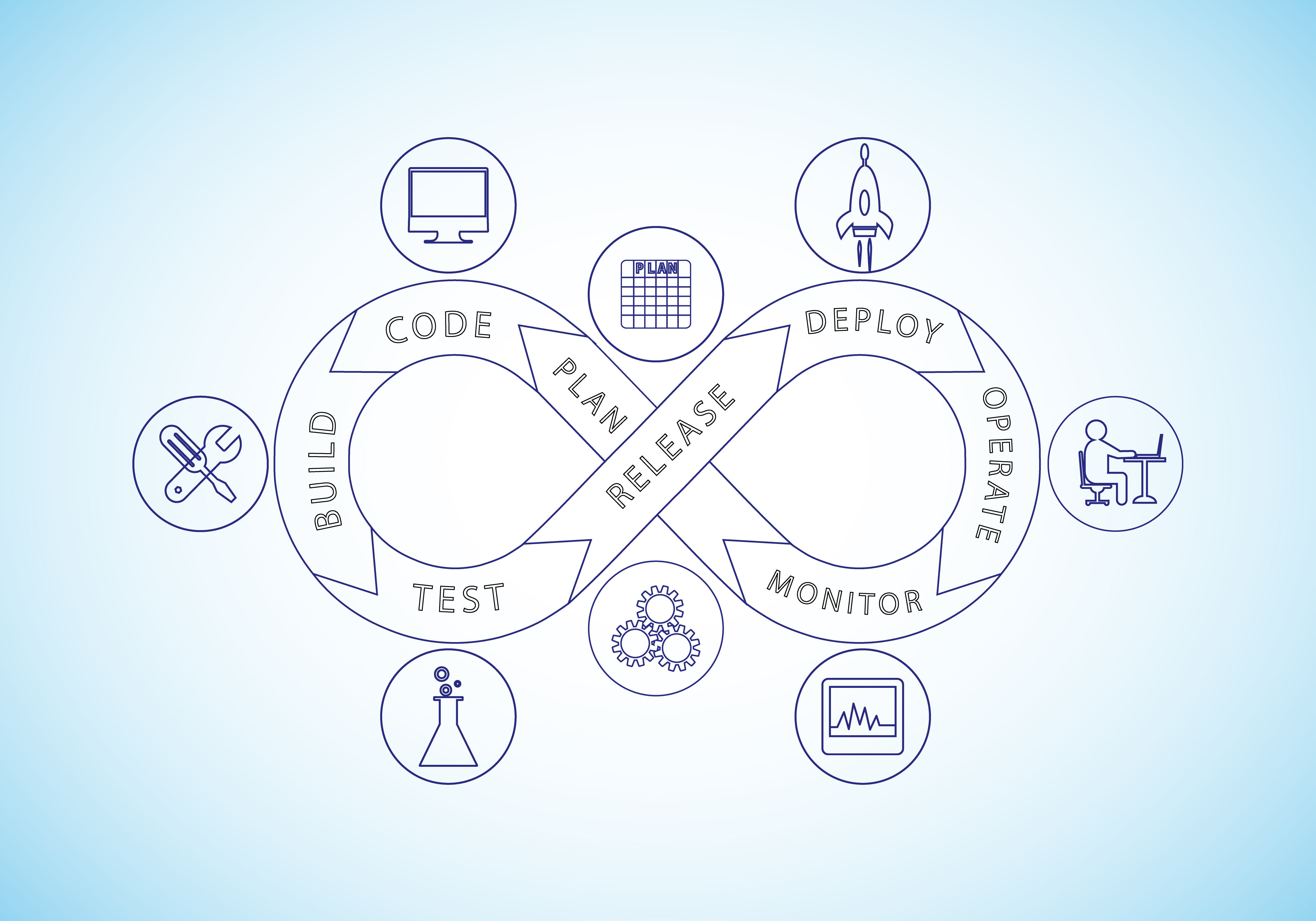
1. Autonomous Incident Response and Remediation
One of the most impactful applications is in incident management. Traditional DevOps relies on alerts, manual triage, and on-call engineers. Agentic AI changes this by creating always-on responders that detect anomalies, analyze logs, identify root causes, and apply fixes.
For example, AWS DevOps Agent uses topology intelligence and a skills hierarchy to investigate incidents across accounts. In real deployments, it has reduced resolution time from hours to minutes, achieving 75% lower MTTR and 94% root cause accuracy in some cases. Agents can rollback deployments, scale resources, patch vulnerabilities, or restart services autonomously, escalating only when confidence is low.
Benefits: 24/7 coverage without burnout, consistent response quality, and massive reduction in paging fatigue. Challenges include ensuring safe guardrails and human approval for high-impact actions. Platforms like Harness and IBM AIOps exemplify observer agents that continuously scan infrastructure for proactive remediation.
2. Intelligent CI/CD Pipeline Optimization and Self-Healing
CI/CD pipelines are the backbone of DevOps, but they often suffer from flakiness, long runtimes, and manual interventions. Agentic AI turns static pipelines into dynamic, self-optimizing systems—sometimes called shifting from CI/CD to Continuous Agentic/Adaptive Deployment (CA/CD).
Agents can:
- Analyze code changes to run only relevant tests (smart test selection).
- Predict and mitigate flaky tests.
- Auto-generate missing test cases.
- Fix build failures by analyzing logs and proposing patches.
- Optimize resource allocation in parallel jobs.
Elastic’s team integrated agentic workflows into monorepo PRs, enabling self-correcting builds that update hundreds of dependencies autonomously. Tools like GitHub Copilot Agents and Bitbucket’s Agentic Pipelines handle multi-step workflows, code reviews, and deployments directly in the pipeline.
This results in faster iteration cycles, lower compute costs, and higher deployment success rates. Open-source efforts like cicaddy embed agents directly into existing CI systems for scheduling and auditing.
3. Automated Infrastructure as Code (IaC) Generation and Management
Writing and maintaining Terraform, Ansible, or Kubernetes manifests is time-consuming and error-prone. Agentic AI agents excel at translating high-level requirements into compliant IaC, then continuously managing drift, updates, and optimizations.
Multi-agent systems can review architecture diagrams, generate secure scripts with best practices (least-privilege IAM, encryption), validate against policies, and even apply changes via pull requests. CircleCI and other platforms demonstrate agents that automate IaC updates based on evolving needs.
Advanced capabilities: Reverse-engineering live cloud estates into updated models, detecting configuration drift, and enforcing compliance as code. This reduces provisioning time dramatically and minimizes security misconfigurations.
For platform engineers, this means shifting from writing boilerplate to defining desired outcomes, with agents handling the execution.
4. Predictive Monitoring, Observability, and Resource Optimization
Agentic AI elevates monitoring from reactive dashboards to predictive, autonomous operations. Agents continuously analyze metrics, logs, and traces to forecast issues, optimize resource utilization, and auto-scale or downsize infrastructure.
Predictive analytics adjust resources based on demand patterns, preventing over-provisioning and cost spikes. In observability, agents perform auto-triage, correlate events across services, and initiate remediations like spinning up new containers.
Real impact: Reduced downtime, optimized cloud spend, and proactive capacity planning. Integration with tools like Prometheus, Grafana, or cloud-native services allows agents to act as virtual SREs.
5. Code Review, Quality Assurance, and Security Scanning
Agentic agents act as tireless collaborators in the development lifecycle. They review pull requests for bugs, performance issues, and security vulnerabilities; suggest refactors; generate documentation; and even enforce standards across large codebases.
GitHub’s agentic workflows enable parallel sub-agents that handle issues, PRs, and complex refactors. Security-focused agents scan for vulnerabilities, propose patches, and verify compliance in real time, shifting security left more effectively than static tools.
This leads to higher code quality, fewer production bugs, and accelerated velocity without sacrificing safety.
6. Compliance, Governance, and Cross-Team Collaboration
Agentic AI embeds policy enforcement throughout the DevOps lifecycle. Agents monitor configurations for regulatory compliance (SOC 2, GDPR, etc.), audit changes, and generate reports automatically.
In collaborative environments, agents coordinate between developers, SREs, and security teams—acting as a shared “DevOps engineer” that routes tasks, summarizes status, and maintains knowledge bases. This is especially valuable in large enterprises with complex stakeholder alignment.
7. Developer Productivity and Onboarding Assistance
Beyond core operations, agents serve as personal DevOps assistants. They help onboard new engineers by generating project setups, answering queries via chat interfaces, and automating repetitive chores like dependency updates or environment provisioning.
Open-source agents like OpenClaw or custom CrewAI setups on Kubernetes demonstrate how individuals and teams can build tailored DevOps bots for internal documentation, troubleshooting, and workflow automation.
Benefits, Challenges, and Implementation Tips
Key Benefits:
- Speed: Faster delivery and recovery.
- Efficiency: Reduced toil and costs.
- Reliability: Consistent, data-driven decisions.
- Scalability: Handles growing complexity in cloud-native environments.
Challenges:
- Security and trust: Agents need robust sandboxing, permission controls, and audit trails.
- Hallucinations or incorrect actions: Require human-in-the-loop for critical paths initially.
- Integration complexity: Best results come from platforms with strong tool-calling and observability.
- Cost of models and compute.
Getting Started:
- Begin with low-risk use cases like code review or documentation.
- Use established platforms (GitHub, Azure, AWS, Harness) for quick wins.
- Adopt open-source frameworks for customization.
- Implement strong monitoring of the agents themselves.
- Iterate with clear success metrics (MTTR, deployment frequency, error rates).
The Future of Agentic DevOps
The evolution points toward fully autonomous software delivery loops where agents handle end-to-end workflows—from idea to production—with humans overseeing strategy. Multi-agent systems will collaborate like human teams, continuously learning from outcomes.
As tools mature, expect tighter integration with IaC, GitOps, and platform engineering. Organizations that embrace agentic AI thoughtfully will gain decisive advantages in velocity, resilience, and innovation capacity.
In summary, the best DevOps use cases for agentic AI revolve around autonomy in high-frequency, high-stakes areas: incidents, pipelines, infrastructure, monitoring, and quality. By augmenting rather than replacing human expertise, these agents are redefining what’s possible in modern software operations—delivering faster, safer, and smarter systems at scale.



