LOG IN
SIGN UP
Tech Job Finder - Find Software, Technology Sales and Product Manager Jobs.
Sign In
OR continue with e-mail and password
E-mail address
Password
Don't have an account?
Reset password
Join Tech Job Finder
OR continue with e-mail and password
E-mail address
First name
Last name
Username
Password
Confirm Password
How did you hear about us?
By signing up, you agree to our Terms & Conditions and Privacy Policy.
Tech Job Finder

Tech Job Finder

21Articles Published

Articles by Tech Job

Startup Basics: Fair Agreement Between Technical/Non-Technical Co-Founders"
Product & PM

Startup Basics: Fair Agreement Between Technical/Non-Technical Co-Founders"

Starting a startup is an exhilarating journey, but one of the most critical early steps is establishing a fair agreement between cofounders, especially when one is technical (often handling product development, coding, and engineering) and the other is non-technical (focusing on business development, marketing, sales, and operations). Without a solid foundation, misunderstandings can lead to disputes, resentment, or even the dissolution of the company. According to various startup experts, cofounder conflicts are a leading cause of early-stage failures. This article explores the essentials of crafting a fair agreement, drawing on best practices to ensure both parties feel valued and motivated.

February 1, 2026
Startup Basics: What is Blitzscaling?
Product & PM

Startup Basics: What is Blitzscaling?

In the cutthroat world of tech startups, where unicorns are born and die in the blink of an eye, one strategy stands out for its sheer audacity: blitzscaling. Coined by Reid Hoffman, co-founder of LinkedIn and PayPal, along with entrepreneur Chris Yeh, blitzscaling is the art and science of rapidly scaling a company to serve a massive, often global market, with the explicit goal of becoming the first mover at scale. It's not just about growing fast—it's about prioritizing speed over efficiency in an environment riddled with uncertainty. Think of it as flooring the gas pedal on a rocket ship, even if you're not entirely sure about the destination or if you'll run out of fuel midway.

February 1, 2026
Startup Basics: What is an MVP?
Product & PM

Startup Basics: What is an MVP?

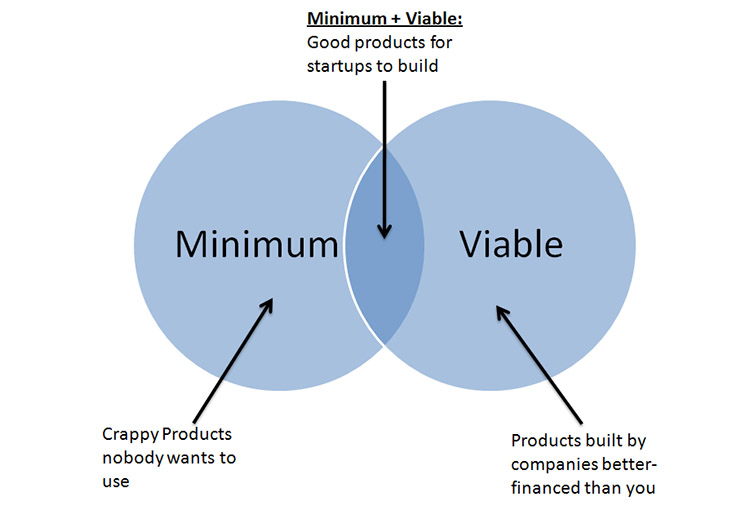
In the fast-paced world of technology and startups, the term "MVP" gets thrown around a lot. But what exactly is it? MVP stands for Minimum Viable Product—a concept that's revolutionized how entrepreneurs and developers bring ideas to life. At its core, an MVP is the simplest version of a product that can still deliver value to users while allowing creators to test assumptions and gather feedback with minimal effort and resources. It's not about building a half-baked app or gadget; it's about smart, strategic development that prioritizes learning over perfection.

February 1, 2026
Amazon cuts jobs, AGAIN: this time, 27k employees bite the dust
General

Amazon cuts jobs, AGAIN: this time, 27k employees bite the dust

Amazon has announced its largest-ever round of layoffs, cutting 27,000 corporate jobs worldwide in a push to reduce bureaucracy and accelerate AI investments. This comes just three months after the company eliminated 14,000 roles in October 2025, bringing the total workforce reductions since last fall to over 41,000 – the biggest in Amazon's 31-year history. The e-commerce and cloud giant, which employs about 1.5 million people globally, is navigating a rapidly changing tech landscape amid economic pressures and internal cultural shifts.

January 31, 2026
Tesla ditches car production in favour of AI robots as new direction is set
General

Tesla ditches car production in favour of AI robots as new direction is set

Tesla Inc. has revealed a significant change in its manufacturing strategy, discontinuing production of its Model S sedan and Model X SUV to redirect resources toward its Optimus humanoid robots. CEO Elon Musk made the announcement during the company's Q4 2025 earnings call, signaling a pivot from traditional electric vehicle (EV) production to AI and robotics. This move comes as Tesla reports its first annual revenue decline, with profits dropping amid slowing EV demand.

January 31, 2026
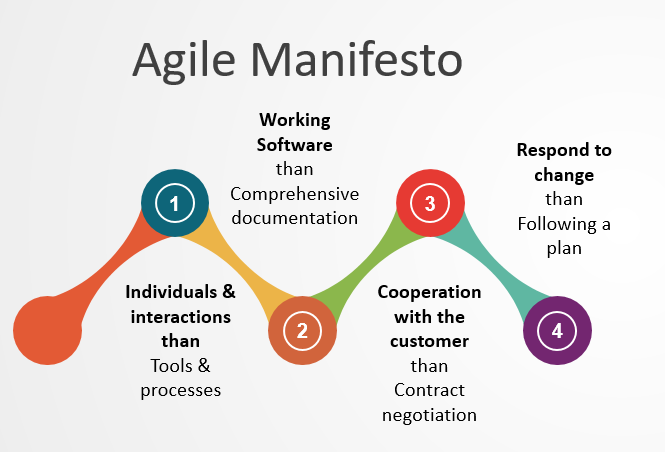
How to Scrum Effectively
Product & PM

How to Scrum Effectively

In the fast-paced world of software development, agility isn't just a buzzword—it's a necessity. Scrum, a lightweight framework within the Agile methodology, has become the go-to approach for teams aiming to deliver high-value products incrementally and iteratively. Born from the minds of Jeff Sutherland and Ken Schwaber in the early 1990s, Scrum emphasizes collaboration, accountability, and continuous improvement. But implementing Scrum isn't about blindly following rituals; it's about adapting it to your team's unique dynamics to maximize efficiency and innovation. This article dives into the essentials of Scrum, offering practical guidance on how to make it work effectively for your tech team. Whether you're a startup hustling to launch an MVP or an enterprise scaling complex systems, mastering Scrum can transform chaotic workflows into streamlined success stories. We'll cover roles, events, artifacts, best practices, and pitfalls to avoid, all tailored for tech environments where code deployments happen daily and user feedback loops are tight.

January 31, 2026
Choosing the Right Frontend Framework in 2026: React, Vue.js, Svelte, or Angular?
Frontend

Choosing the Right Frontend Framework in 2026: React, Vue.js, Svelte, or Angular?

In the ever-evolving landscape of web development, selecting the appropriate frontend framework is crucial for building efficient, scalable, and maintainable applications. As of 2026, React, Vue.js, Svelte, and Angular remain dominant players, each with unique strengths tailored to different project needs. React, developed by Meta, powers massive ecosystems like Facebook. Vue.js, created by Evan You, emphasizes simplicity and flexibility. Svelte, from Rich Harris, focuses on compile-time optimization for lean performance. Angular, backed by Google, offers a comprehensive, opinionated structure ideal for enterprises. This article compares these frameworks across key metrics—popularity, performance, learning curve, ecosystem, and use cases—to help developers decide which to choose. Drawing from recent surveys and benchmarks, we'll explore why no single framework fits all scenarios, but strategic selection can accelerate development and reduce long-term costs.

January 30, 2026
Which Web Python Backend to Choose: Django vs FastApi vs Flask
Backend

Which Web Python Backend to Choose: Django vs FastApi vs Flask

In the world of Python web development, selecting the appropriate framework can significantly impact your project's efficiency, scalability, and maintainability. Django, FastAPI, and Flask stand out as three of the most popular options, each catering to different needs and philosophies. Django is a full-featured, "batteries-included" framework ideal for complex applications. Flask offers a minimalist, flexible approach for those who prefer building from the ground up. FastAPI, a newer entrant, emphasizes speed, asynchronous capabilities, and API development with modern features like automatic documentation. This article delves into their histories, key features, performance, use cases, pros and cons, and ultimately helps you decide which might suit your next project. We'll compare them across various dimensions to provide a clear perspective.

January 30, 2026
10 Hardest Python Interview Questions
Python

10 Hardest Python Interview Questions

Python's popularity in software development, data science, and web applications makes it a staple in technical interviews. However, beyond basic syntax and data structures, interviewers often probe deeper into Python's internals, concurrency, and advanced features to gauge a candidate's expertise. This article explores 10 of the hardest Python interview questions, complete with explanations, sample code, and insights into why they trip up even seasoned developers. These questions test conceptual understanding, problem-solving, and the ability to navigate Python's quirks. Whether you're preparing for a FAANG interview or a senior role, mastering these will set you apart. We'll aim for clarity while diving into the complexities.

January 30, 2026
The 10 Hardest Senior React Interview Questions
Frontend

The 10 Hardest Senior React Interview Questions

In the ever-evolving landscape of front-end development, React remains a cornerstone technology, powering countless web applications with its component-based architecture and efficient rendering. For senior React developers, interviews often go beyond basic hooks and state management, delving into the internals, performance optimizations, and architectural decisions that separate good code from great. These questions test not just knowledge but the ability to think critically about scalability, maintainability, and edge cases in large-scale applications. As React has matured—especially with versions like React 18 introducing concurrent features—interviewers seek candidates who can navigate complex scenarios. In this article, we'll explore the 10 hardest senior React interview questions, complete with explanations, potential answers, and insights into why they're challenging. Whether you're preparing for an interview or mentoring juniors, understanding these will sharpen your expertise. We'll break them down step by step, aiming to provide actionable depth.

January 30, 2026
New Critical Denial-of-Service Node.js Vulnerability Disclosed
JavaScript

New Critical Denial-of-Service Node.js Vulnerability Disclosed

Node.js, the popular JavaScript runtime, has addressed a critical denial-of-service (DoS) vulnerability that could cause unrecoverable server crashes, affecting a vast majority of production applications. The flaw, tracked as CVE-2025-59466, was patched in security updates released earlier this month, prompting urgent calls for developers to upgrade their systems.

January 30, 2026
The 2025 H-1B Visa Crackdown: A 4-Month Retrospective
General

The 2025 H-1B Visa Crackdown: A 4-Month Retrospective

Four months after President Donald Trump's September 19, 2025, proclamation imposing a $100,000 supplemental fee on new H-1B visa petitions for workers outside the United States, the policy's ripples are reshaping America's immigration landscape, tech industry, and global talent flows. Coupled with the Department of Homeland Security's (DHS) December 2025 rule introducing a weighted lottery system favoring higher-wage applicants—effective February 27, 2026—these reforms represent the most aggressive overhaul of the H-1B program in decades. Aimed at protecting American workers from wage suppression and job displacement, the crackdown has sparked debates over its economic costs, innovation stifling, and geopolitical ramifications. This analysis dissects the multifaceted impacts based on emerging data, industry reports, and stakeholder reactions as of early 2026.

January 9, 2026
Which Coding LLMs is the Best? (Hint: Depends)
General

Which Coding LLMs is the Best? (Hint: Depends)

The question of which coding LLM to use has no single answer. Each situation requires a different tool, and each tool excels in different areas and also has different pricing (and therefore varying degrees of dent on your bank account). The landscape has matured into a toolkit of specialists rather than a universal champion. Depending on your workflow, budget, codebase size, preferred language, need for reasoning depth versus speed, or whether you prioritize open-source flexibility, the optimal choice shifts dramatically. Just two years ago, developers largely debated GPT-4 variants versus Claude 3 Opus. Today the field includes GPT-5 series, Claude 4 family, Gemini 3.x, Grok 4.x, DeepSeek R1/V3 derivatives, Qwen3-Coder, GLM-4.6, Llama 4 variants, and specialized code models. Benchmarks like SWE-bench Verified (real GitHub issue resolution), LiveCodeBench (contamination-free LeetCode/AtCoder-style problems), Terminal-Bench, and agentic coding evals reveal no model dominates every category.

January 9, 2026

Unpacking MongoBleed: The Critical Vulnerability Shaking MongoDB Deployments
Cybersecurity

Unpacking MongoBleed: The Critical Vulnerability Shaking MongoDB Deployments

As 2025 draws to a close, the cybersecurity community continues to grapple with MongoBleed (CVE-2025-14847), a severe unauthenticated memory disclosure vulnerability in MongoDB Server that has drawn stark comparisons to the infamous Heartbleed bug from 2014. This flaw has triggered rapid exploitation worldwide, with over 87,000 internet-exposed instances at risk and active attacks confirmed by multiple security firms. Below is a structured overview of the vulnerability, its technical details, timeline, impact, and recommended actions.

December 31, 2025
The Docker Revolution: How Containers Transformed Deployments Forever
DevOps & Cloud

The Docker Revolution: How Containers Transformed Deployments Forever

Docker has transformed the landscape of software development, deployment, and operations since its inception, enabling developers to build, ship, and run applications in consistent environments across any infrastructure. This "revolution" refers to the widespread adoption of containerization technology, which addresses long-standing challenges like environment inconsistencies and deployment complexities.

December 25, 2025
The Killer Startup Full Stack: Nest.js, Prisma, Next.js with Postgres, Hosted on DigitalOcean
Full Stack

The Killer Startup Full Stack: Nest.js, Prisma, Next.js with Postgres, Hosted on DigitalOcean

In the fast-paced world of startups, choosing the right tech stack can make or break your venture. It's not just about building an app—it's about creating something scalable, maintainable, and cost-effective that allows you to iterate quickly while keeping an eye on the bottom line. Enter the killer combo: Nest.js for the backend, Prisma as the ORM, Next.js for the frontend, PostgreSQL as the database, all hosted on DigitalOcean. This stack has gained traction among bootstrapped founders and small teams for its blend of performance, developer experience, and affordability. As of late 2025, with the rise of AI-integrated apps and real-time features, this setup remains a top choice for SaaS platforms, e-commerce sites, and API-heavy applications. In this article, we'll dive deep into why this stack rules, break down each component, explore integration, and guide you through deployment. By the end, you'll see why it's a "killer" for startups aiming to launch MVPs that can scale to enterprise levels.

December 25, 2025
Is Cursor's $200 Ultra Subscription Worth It?
General

Is Cursor's $200 Ultra Subscription Worth It?

Cursor AI has rapidly become a staple in the developer toolkit, blending the familiarity of VS Code with powerful AI-driven features. As we hit the end of 2025, the debate around its premium offerings intensifies, especially the $200/month Ultra plan. Priced at a premium, it promises unparalleled access to top-tier models like Claude Opus 4.5, GPT series, and Gemini, with massive usage limits. But is it truly worth the investment? This 900-word analysis draws from user reviews, forum discussions, and expert insights to help you decide. We'll break it down by features, pros, cons, real-world experiences, alternatives, and a final verdict.

December 25, 2025
Has Next.js Lost The Plot?
Frontend

Has Next.js Lost The Plot?

In the ever-evolving, fast-paced world of web development, few tools have risen as meteorically as Next.js. Launched in 2016 by Vercel (then Zeit), Next.js quickly became the go-to framework for building React applications, offering seamless server-side rendering (SSR), static site generation (SSG), and API routes out of the box. Its promise was simple: make React production-ready without the hassle. Developers flocked to it for its performance boosts, SEO advantages, and ease of deployment. But fast-forward to 2025, and a growing chorus of voices argues that Next.js has "lost the plot"—straying from its core principles of simplicity and reliability into a quagmire of complexity, instability, and vendor lock-in. This article explores these criticisms, drawing from developer forums, blogs, and real-world experiences, to assess whether Next.js is still the hero it once was or if it's time for alternatives to shine.

December 25, 2025
On The React2Shell Vulnerability...
Cybersecurity

On The React2Shell Vulnerability...

In the fast-paced world of web development, frameworks like Next.js have revolutionized how we build scalable, performant applications. Powered by React, Next.js offers server-side rendering, static site generation, and now React Server Components (RSC) for enhanced efficiency. However, this innovation came under fire in late 2025 with the emergence of React2Shell, a maximum-severity vulnerability that exposed thousands of applications to remote code execution (RCE). Dubbed a "Log4j moment" for frontend development, this scandal has sent shockwaves through the developer community, highlighting the risks of rapid adoption without robust security scrutiny. This report explores the vulnerability's origins, mechanics, real-world exploits, and the path forward for affected users.

December 23, 2025
Introduction to Quantitative Finance Careers
General

Introduction to Quantitative Finance Careers

Quantitative finance, often referred to as "quant finance," is a dynamic field that merges advanced mathematics, statistics, computer science, and financial theory to solve complex problems in the financial markets. It emerged prominently in the 1980s with the development of computational methods for pricing derivatives and has since evolved to encompass data science, machine learning, and algorithmic trading. Today, quants—professionals in this domain—play central roles in investment banks, hedge funds, asset management firms, and fintech companies. They develop models to predict market movements, manage risks, and optimize trading strategies, contributing to efficient capital allocation and economic stability. The appeal of quant finance careers lies in their intellectual rigor, high compensation—entry-level salaries often exceed $225,000—and opportunities for innovation in a fast-paced environment. With the rise of AI and big data, the demand for quants continues to grow, making it an attractive path for STEM graduates.

December 23, 2025
How to Pass HireVue Interviews
General

How to Pass HireVue Interviews

In the competitive job market of 2025, HireVue interviews have become a staple for many employers, from tech giants to financial institutions like J.P. Morgan and Goldman Sachs. HireVue is an AI-powered video interview platform that allows candidates to record responses to pre-set questions at their convenience, often as an initial screening step. This one-way format eliminates live interaction, putting the onus on you to deliver polished, engaging answers while the system analyzes content, tone, and non-verbal cues. Passing these interviews requires strategic preparation, technical savvy, and authentic delivery. This article outlines proven strategies to help you succeed, drawing from expert advice and real-world tips.

December 23, 2025