Origins and Rise of Tokenmaxxing
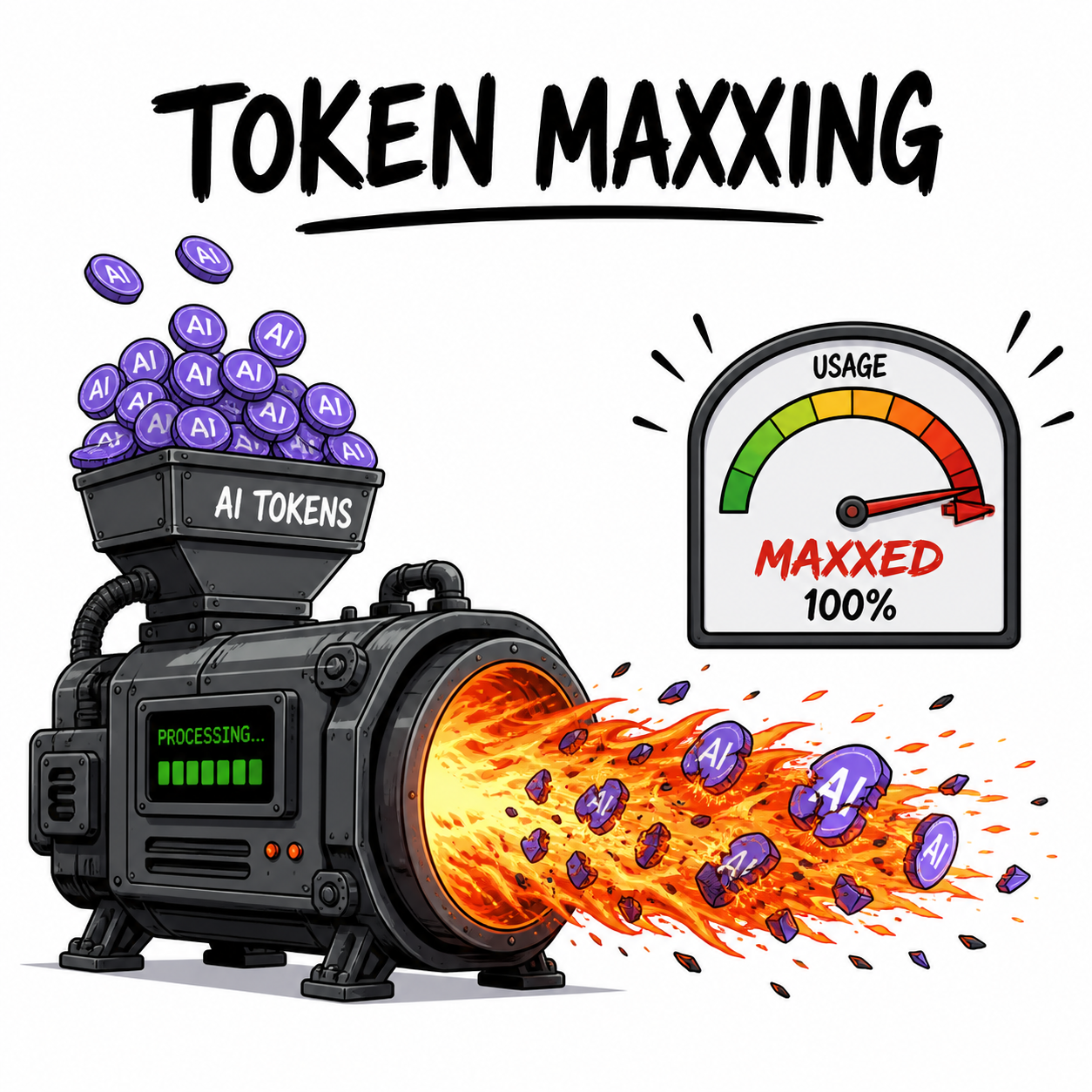
The term borrows the Gen Z slang suffix “-maxxing” (as in looksmaxxing or sleepmaxxing), meaning to optimize something to an extreme. In this context, it describes both a personal strategy and a corporate metric. Engineers discovered they could inflate numbers by writing verbose prompts, running multiple AI agents in parallel, maintaining massive context windows, or even looping agents on trivial tasks. Leaderboards turned this into a competition, complete with badges and recognition.
Proponents argued it encouraged AI adoption. In an era where executives demanded proof that expensive AI investments were paying off, visible token consumption offered a simple, quantifiable signal. Higher usage supposedly meant workers were leveraging cutting-edge tools more effectively, iterating faster, and embracing the future of work. Some companies even tied it to performance reviews or internal status.
This phenomenon spread quickly. Reports emerged from Meta, Microsoft, Salesforce, Amazon, and other tech giants. It reflected broader anxiety about measuring white-collar productivity when AI automates large parts of cognitive work. Traditional metrics like lines of code or tickets closed felt outdated when a single prompt could generate hundreds of lines.
The Allure: Why It Seems Like a Good Idea
At first glance, tokenmaxxing makes intuitive sense. AI providers charge based on tokens, so usage correlates with investment in the technology. In theory, more tokens processed should equal more problems solved, more code generated, and more innovation. Early AI adopters who crafted sophisticated agent swarms or exhaustive research loops naturally consumed more tokens and often delivered impressive results.
Companies facing pressure to demonstrate ROI on multimillion-dollar AI budgets loved the visibility. Dashboards provided real-time data on who was “AI-native.” It felt objective in a field plagued by subjective evaluations. For individual contributors, climbing the leaderboard offered a dopamine hit and a way to stand out in a competitive job market.
Some framed it positively: structured token-heavy workflows, such as parallel research agents or iterative refinement loops, can genuinely boost output when used skillfully. Proponents saw it as a transitional metric during the rapid integration of AI into software development.
Why Tokenmaxxing Fails as a Productivity Measure
Despite its popularity, tokenmaxxing is fundamentally flawed. It measures activity and input rather than outcomes or value. This mirrors historical mistakes in software engineering, such as rewarding developers for lines of code written — a metric famously gamed by adding unnecessary complexity or comments.
1. It’s easily gamed. Engineers quickly learned to maximize tokens without creating value. Techniques included overly verbose prompts, unnecessary agent loops, querying the same model repeatedly, or using AI for menial tasks that humans could handle faster. One could run background agents churning tokens on low-value work while producing little shippable output. Data from engineering intelligence platforms showed that high-token users sometimes generated twice the pull requests but at ten times the cost — with no proportional quality or business impact.
2. It ignores quality and efficiency. More tokens often mean worse efficiency. Bloated prompts can lead to noisier, hallucinated, or irrelevant outputs. Excessive context windows increase costs and latency without improving results. True productivity comes from concise, well-engineered prompts and targeted use, not volume. Studies and post-mortems revealed that tokenmaxxing correlated with higher code churn — more generated code that was later deleted or refactored.
3. It decouples effort from business value. Tokens consumed say nothing about whether features shipped, customer problems were solved, revenue increased, or technical debt decreased. A developer burning billions of tokens on experimental agents that never reach production contributes nothing measurable. Conversely, a highly efficient engineer using fewer tokens for high-leverage tasks (architecture decisions, critical bug fixes, strategic planning) may deliver outsized impact.
4. It creates perverse incentives. Leaderboards encouraged wasteful spending. Companies reported skyrocketing AI bills from tokenmaxxing behaviors, prompting some (like Amazon) to dismantle leaderboards and curb the practice. It fostered a culture of visible busyness over deep work, potentially leading to burnout and misallocation of resources. Critics called it “conspicuous consumption” of AI — signaling status rather than driving results.
5. It overlooks human elements. Creativity, strategic thinking, collaboration, and judgment often require less token-heavy interaction. The best AI users combine tools thoughtfully rather than maximizing usage. Tokenmaxxing risks turning knowledge workers into prompt monkeys, undermining the very augmentation AI promises.
Better Ways to Measure AI-Driven Productivity
Thoughtful leaders advocate for outcome-oriented metrics inspired by frameworks like DORA (DevOps Research and Assessment). These include:
- Throughput: Features or pull requests successfully deployed and maintained.
- Quality: Bug rates, customer satisfaction, system reliability.
- Efficiency: Time-to-value, cost per delivered feature, or reduction in cycle time.
- Impact: Business metrics such as revenue influenced, user engagement improved, or technical debt reduced.
- Adoption with results: Track token usage alongside these outcomes to identify high-ROI patterns rather than raw volume.
Tools from companies like Faros AI or Jellyfish help correlate AI usage with engineering outcomes. Early-stage adoption might benefit from token tracking, but mature measurement must focus on what survives in production and drives value.
The Broader Implications
Tokenmaxxing highlights a deeper challenge: measuring productivity in the AI era is genuinely difficult. Cognitive work resists simple quantification, and rapid technological change amplifies uncertainty. While the trend may fade as companies grow wiser about costs and results, it underscores risks of proxy metrics in knowledge work.
It also reveals tensions between innovation pressure and fiscal responsibility. CEOs cheered AI enthusiasm; CFOs worried about exploding bills. The backlash — leaderboards taken down, articles decrying vanity metrics — shows the industry self-correcting.
Ultimately, tokenmaxxing won’t work as a productivity measure because productivity isn’t about how much AI you talk to — it’s about what you achieve together. The most effective teams will treat AI as a multiplier for human ingenuity, not a consumption contest.
As organizations move beyond the hype, they’ll seek balanced approaches: encouraging experimentation while demanding accountability to real outcomes. Token usage data remains useful telemetry for cost control and workflow optimization, but never as the primary scorecard.
The tokenmaxxing episode serves as a reminder that in technology, as in life, what gets measured gets managed — but only if you measure the right things. Chasing shadows of productivity through token counts risks missing the substance: meaningful progress, sustainable innovation, and genuine value creation.
In the end, the winners won’t be those who burned the most tokens. They’ll be the ones who built the most impactful products with intelligence — both artificial and human.