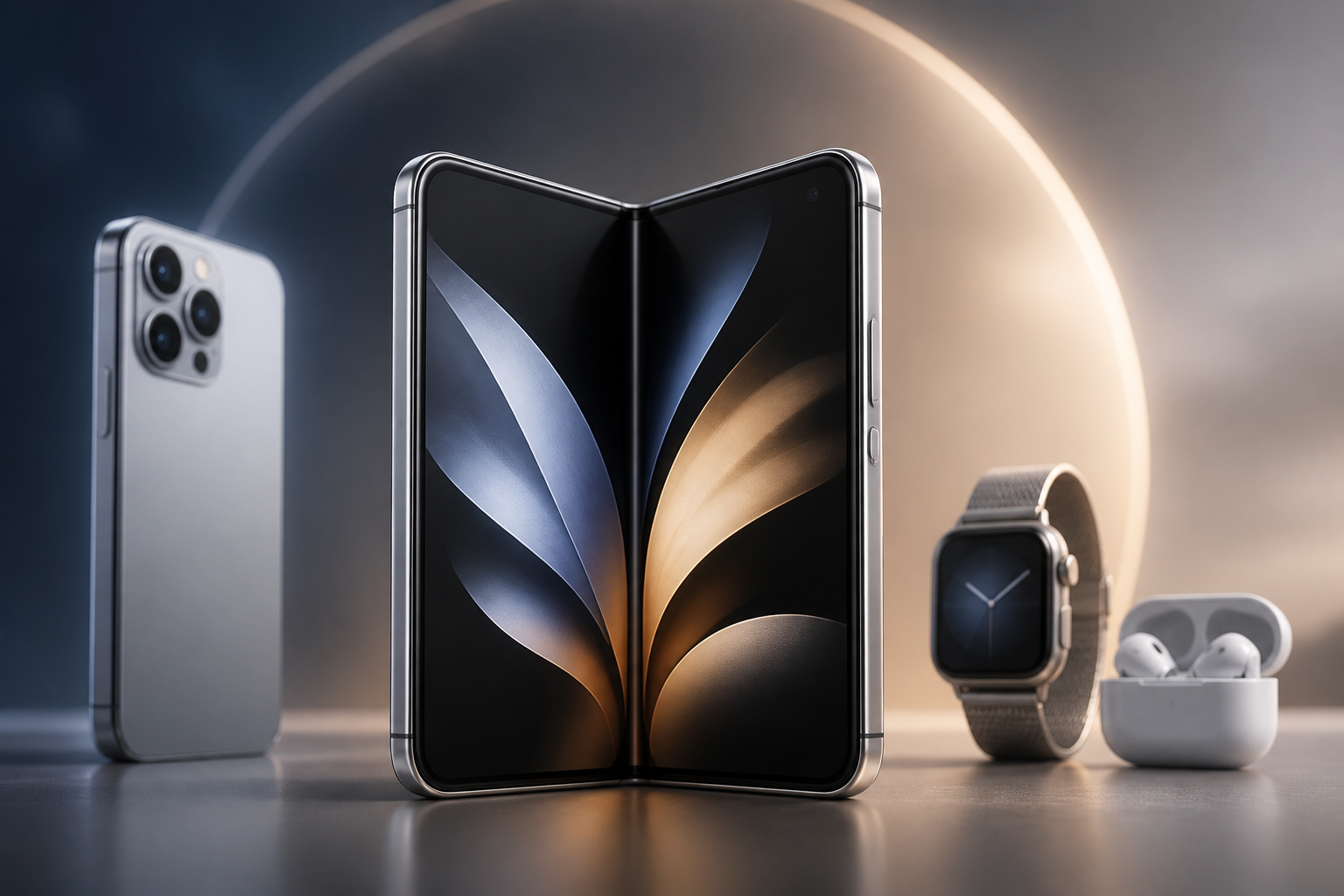
Apple introduced the iPhone Duo as its initial entry into the foldable smartphone category during the September 9 event. The device carries a $2,000 price tag and is scheduled for an October launch rather than the traditional September window. Alongside it, the company showed the iPhone 18 Pro, updated watches, and new AirPods, yet coverage quickly centered on the foldable model and the decision to hold back the standard iPhone 18.
Event Details and Timeline Shift
The presentation highlighted the iPhone Duo's ability to fold flat while maintaining two distinct display surfaces. Engineers described the hinge as a custom titanium assembly tested for over 200,000 cycles. Because the hardware will not reach customers until October, Apple elected to skip the usual simultaneous release of all iPhone 18 variants. The standard model now carries an unspecified later date, allowing teams to complete final software calibration for the new form factor.
Background on Foldable Development
Apple had remained silent on foldables while competitors shipped multiple generations of devices. Internal work on the hinge and cover-glass materials reportedly began after the 2021 iPhone 13 cycle. The Duo represents the first public result of that effort, pairing two 6.1-inch panels that form a single 12.2-inch surface when opened. Developers have long requested guidance on handling variable screen geometries, and the October ship date gives them roughly four weeks of additional preparation time before devices arrive in stores.
Developer Considerations for the New Form Factor
Mobile engineers will need to account for three primary states: folded, partially open, and fully flat. When folded, the device behaves like a conventional phone with a single active display. When opened, the system exposes a larger canvas that can host two independent app windows or a single expanded interface. Early documentation indicates new UIKit traits and SwiftUI container views that report hinge angle and available layout regions in real time. Teams maintaining productivity and note-taking apps are already mapping split-view behaviors that previously existed only on iPad.
Testing matrices must now include hinge durability checks and thermal throttling profiles that differ from bar-style phones. The dual-display setup also introduces questions around continuity when an app moves from one panel to the other during a fold transition. Apple has supplied updated simulator profiles, yet several framework leads note that real-device validation will remain limited until October units ship to developers.
Market and Ecosystem Reactions
Enterprise customers have expressed interest in the larger canvas for field-service and logistics applications. At the same time, analysts highlight the $2,000 starting price as a barrier for broad consumer adoption. Software teams at major social platforms are evaluating whether to surface dedicated tablet-class layouts automatically when the device is unfolded. Smaller studios worry that the extra testing burden could delay their own feature releases by several weeks.
Third-party accessory makers are preparing cases that protect the hinge without interfering with the folding motion. Case manufacturers report that early samples show tighter tolerances than previous iPhone models, requiring revised tooling. Battery and thermal engineers outside Apple are studying how the dual-panel design distributes heat during sustained workloads such as video encoding or AR sessions.
Next Steps for the Platform
With the standard iPhone 18 delayed, the fall software update cycle will likely emphasize foldable-specific APIs. Developers can expect additional sessions at upcoming conferences focused on layout adaptation and state restoration across the hinge. Apple has not confirmed whether the Duo will receive a software update cadence separate from other iPhone 18 devices. Teams are therefore planning for unified builds that branch behavior based on runtime detection of the foldable hardware.
The October release window also aligns with holiday shopping, giving Apple a compressed but high-visibility sales period. Software updates between announcement and launch will be critical for ironing out edge cases in multitasking and external display support. For now, the engineering community is focused on the new layout traits and the practical limits of the hinge mechanism under daily use.