Google launches Pixel 11 lineup with deeper Gemini integration
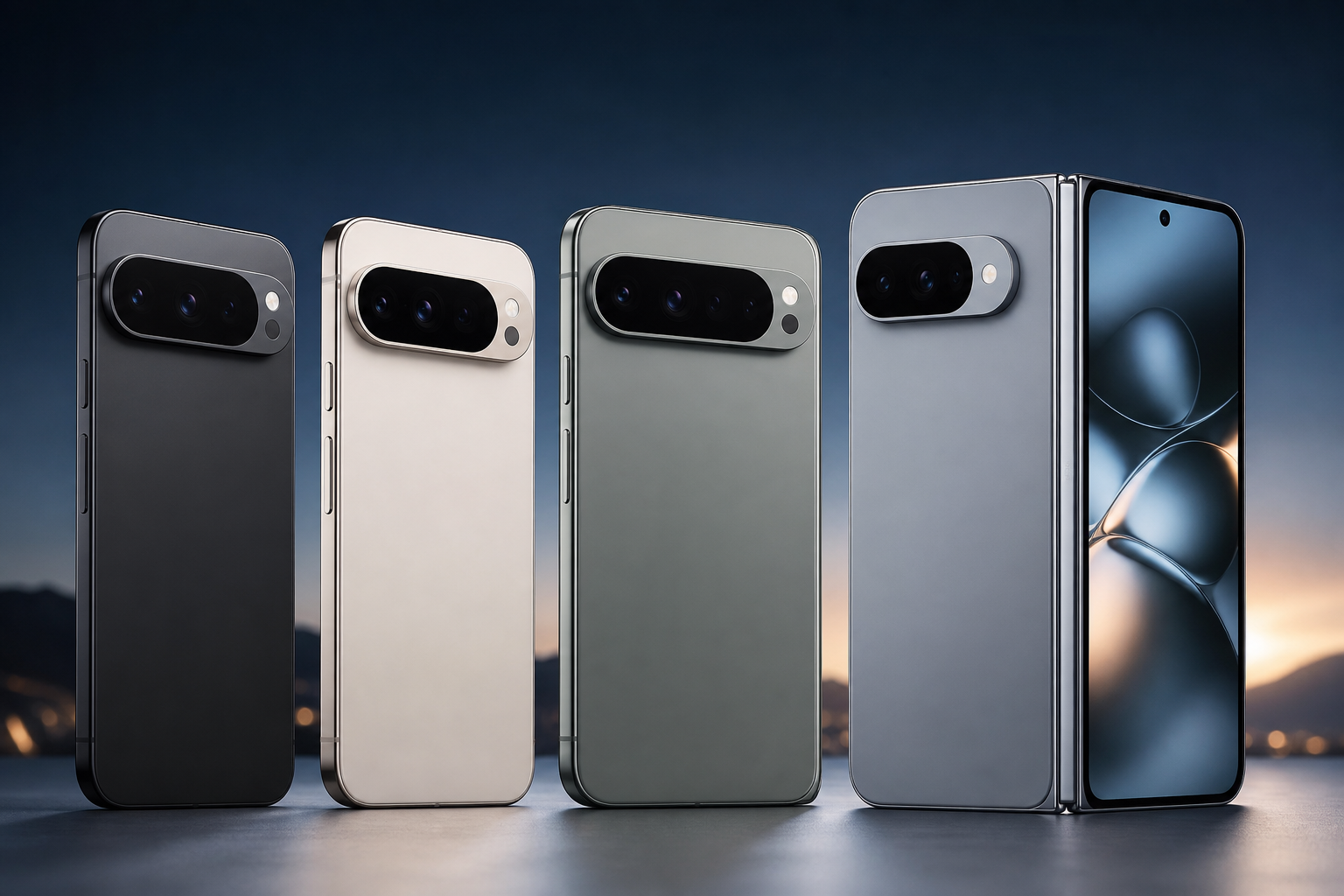
Google introduced the Pixel 11, Pixel 11 Pro, Pixel 11 Pro XL and Pixel 11 Pro Fold on Wednesday, August 12. Each model runs on the new Tensor G6 system-on-chip and incorporates expanded Gemini capabilities that surface suggestions and complete tasks with less explicit prompting than prior versions.
Hardware lineup and chip details
The standard Pixel 11 retains a compact form factor while the Pro XL stretches to a larger display. The Pro Fold introduces refined hinge mechanics and a cover screen sized for quick interactions. Tensor G6 moves to a more efficient fabrication node and adds dedicated silicon for on-device Gemini inference. This change reduces reliance on cloud calls for routine operations such as calendar summarization and photo editing.
Gemini integration changes
Gemini now observes user context across multiple apps without requiring explicit invocation. It can draft replies in messaging threads, adjust calendar events based on travel delays, and generate code snippets for Android Studio when the phone is connected as a test device. Developers gain access to new extension points that let applications register custom actions the model can trigger. The integration also includes improved multimodal handling so Gemini can reason over screenshots or live camera feeds.
Developer implications
Mobile engineers will notice updated TensorFlow Lite delegates optimized for the G6 NPU. Applications that perform on-device machine learning can offload more operations to the new hardware blocks, lowering latency and power draw. Google released an early preview of the Gemini Mobile SDK that exposes prompt templates and context APIs. Teams building productivity tools can now surface proactive cards inside their own apps when the system detects relevant user intent.
API surface and tooling updates
The SDK introduces methods for registering domain-specific functions that Gemini can call. An example registration looks like this:
gemini.registerFunction("summarizeNotes", noteId -> { ... })Build tools in Android Studio now include a Gemini side panel that suggests refactors based on the current activity or fragment. Early testers report that suggestions improve when the connected Pixel 11 device shares anonymized usage signals, though the feature remains optional.
Market reception and pricing debate
Analysts noted that year-over-year hardware upgrades appear incremental, with camera sensors carrying over from the previous generation and only modest battery capacity increases. Pricing for the Pro models sits above last year’s equivalents, prompting discussion about whether the added AI features justify the cost for mainstream buyers. Enterprise customers expressed interest in the improved security sandbox around Gemini processing, which keeps certain prompts on-device even when the model draws from cloud resources.
Competitive landscape
Apple’s upcoming iOS release and Samsung’s Galaxy AI initiatives continue to push similar proactive assistance features. Google’s advantage lies in tighter control over both silicon and the Gemini model stack, allowing faster iteration on on-device capabilities. Rival chipmakers are watching the G6’s NPU utilization metrics closely, as they may influence future mobile SoC roadmaps.
Longer-term outlook
The Pixel 11 series serves as a testbed for deeper AI integration that Google plans to expand to other Android devices through Play Services updates. Developers are advised to begin experimenting with the new Gemini extension APIs now, because future Pixel hardware will likely increase the amount of local inference available. Over the next year, expect refined context windows, better multi-app orchestration, and additional privacy controls that surface in the developer console.
Teams shipping consumer applications should evaluate how proactive Gemini cards might replace or complement existing notification strategies. Those working on enterprise tooling can explore the on-device function calling path to keep sensitive data within corporate boundaries. The launch signals that Google views AI not as an accessory but as the primary interface layer for future Pixel experiences, shifting engineering priorities toward model fine-tuning and context management rather than traditional UI polish alone.
Early software builds show stable performance under sustained Gemini workloads, though thermal throttling remains observable during extended video calls paired with real-time transcription. Battery endurance tests conducted in controlled conditions indicate roughly a 10 percent improvement over the prior Tensor generation when AI features stay active. These metrics will be validated further once independent labs publish their results.
Overall, the Pixel 11 introduction underscores a broader industry movement where silicon, software, and cloud models converge around a single conversational agent. For mobile developers, the immediate task is mapping existing features onto the new Gemini hooks while monitoring power and privacy implications. The coming months will reveal whether users embrace the more autonomous assistant behavior or prefer retaining explicit control over every action.