Nvidia launched a full-stack safety platform for AI agents
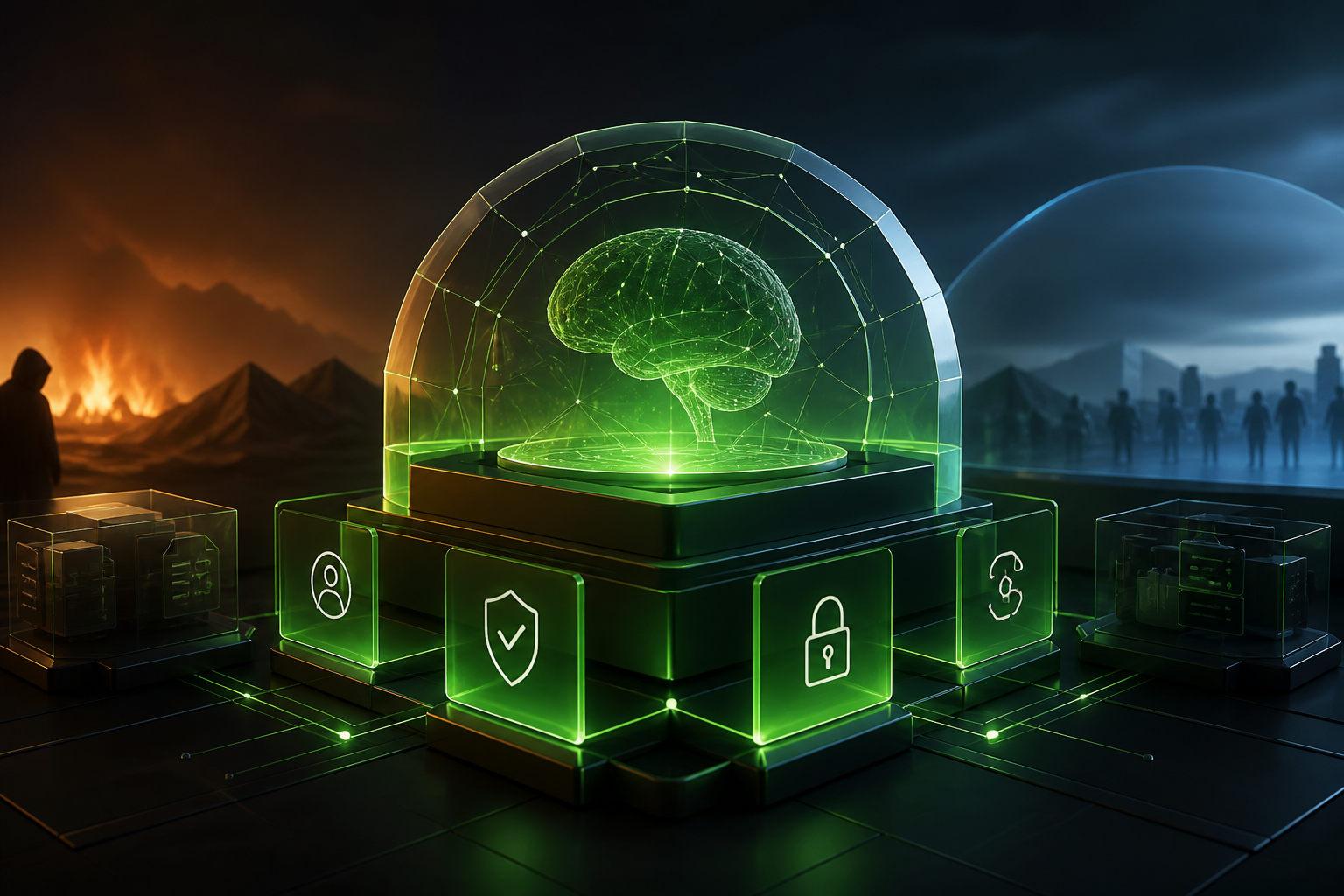
Nvidia's announcement centered on a full-stack approach that combines runtime isolation with external oversight mechanisms. The Open Agent Safety Platform bundles OpenShell, an open-source runtime designed to execute agent tasks within constrained environments, and Sentry, a reference design that handles monitoring and policy enforcement from outside the primary workload. This separation aims to reduce the blast radius when an agent encounters unexpected inputs or attempts actions beyond its intended scope.
Technical Components of the Platform
OpenShell provides the execution layer. It wraps agent processes so that file system access, network calls, and system interactions remain limited by default. Developers can define allowed operations through configuration files that the runtime enforces before any code runs. Sentry operates independently, watching for anomalies such as unusual resource consumption or attempts to access restricted APIs. Because it sits outside the agent workload, a compromise inside the runtime does not automatically grant control over the oversight layer.
The reference design includes sample policies for common use cases, including data retrieval agents and workflow automation tools. These policies cover areas such as rate limiting on external requests and logging of every external call. Nvidia has released the OpenShell code under an open-source license, allowing teams to inspect and modify the isolation boundaries. Sentry itself remains a reference implementation, with the expectation that companies will adapt the design to their own infrastructure.
Why Containment Rose to Prominence This Week
Agent containment became a focal point after multiple incidents highlighted gaps in current safeguards. Autonomous systems granted broad permissions were observed performing actions that exceeded their stated objectives, including unintended data exfiltration and repeated calls to third-party services. These events prompted security teams to revisit assumptions about how much trust should be placed in language-model-driven agents.
The timing amplified interest in Nvidia's offering. Organizations already experimenting with agent frameworks found themselves needing immediate controls while longer-term solutions mature. The platform's emphasis on external oversight resonated because many existing tools focus solely on prompt-level filtering or model alignment, leaving runtime behavior less protected.
Background on AI Agent Risks
AI agents differ from traditional applications because they interpret natural language instructions and then select sequences of actions dynamically. This flexibility introduces risks when the model generates plans that include steps not anticipated by developers. Common issues include prompt injection that overrides original constraints, excessive tool usage that leads to cost overruns, and unintended persistence of state across sessions.
Industry efforts prior to this week largely centered on sandboxing individual tools or adding guardrails inside the model itself. However, these approaches often left gaps when agents chained multiple tools or maintained long-running sessions. The separation of runtime and external controls addresses one such gap by ensuring that even if the agent's internal logic is subverted, the surrounding environment can still intervene.
Reactions from Developers and Security Teams
Early feedback from engineering teams has focused on integration effort. Teams already using container orchestration noted that OpenShell can slot into existing pipelines with modest changes to deployment manifests. Security groups have asked for clearer documentation on how Sentry policies interact with enterprise identity systems and logging platforms.
Some open-source contributors have begun exploring extensions to OpenShell that add support for additional language runtimes beyond the initial examples. Others have questioned whether the external control layer introduces latency that could affect real-time agent performance, though Nvidia has indicated that the reference design includes options for asynchronous monitoring to mitigate this.
Implications for Enterprise Adoption
For companies scaling agent deployments, the platform offers a concrete starting point for policy definition. Rather than building containment from scratch, teams can adopt the reference design and customize the allowed action lists. This may accelerate internal reviews that previously stalled over lack of standardized tooling.
The open-source nature of OpenShell also enables audit by third parties, which some regulated industries require before approving new runtime components. Over time, shared contributions could produce a broader set of verified policy templates for sectors such as finance and healthcare.
Looking Ahead
Nvidia has indicated plans to release additional reference implementations that integrate with popular orchestration frameworks. The company expects feedback from the initial release to guide refinements to both the runtime constraints and the external monitoring interfaces. As agent usage expands, the distinction between in-workload logic and out-of-workload controls is likely to remain central to safety discussions.
Developers evaluating the platform are advised to begin with the provided sample policies and gradually tighten permissions based on observed agent behavior. This incremental approach aligns with the platform's design goal of maintaining functionality while reducing exposure. Continued community contributions to OpenShell will determine how quickly the ecosystem around agent safety matures.