
Twitch opts streamers into training Amazon's generative AI
The Policy Change
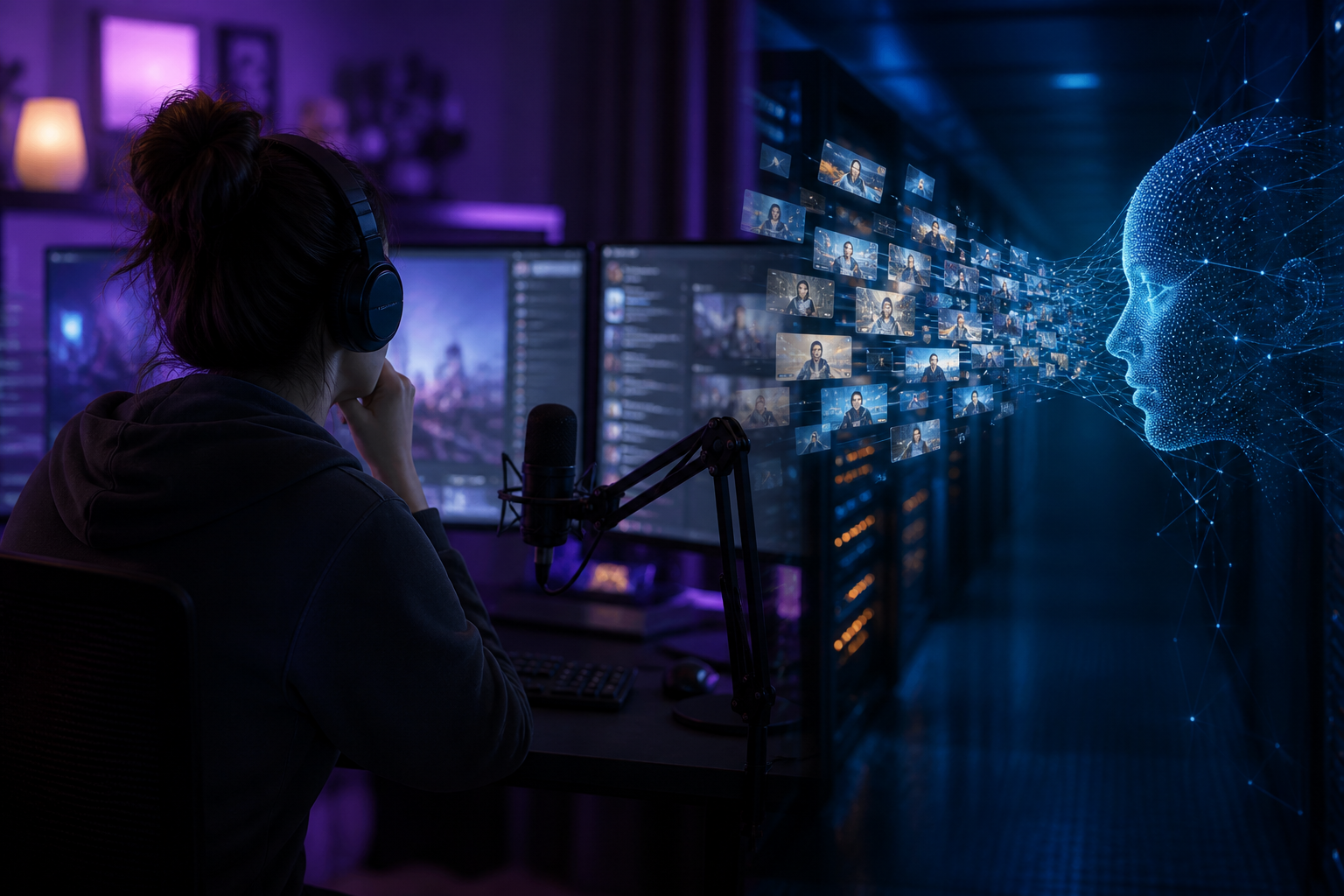
Twitch disclosed the existence of an account-level toggle that determines whether a channel's live streams, VOD archives, clips, and chat logs can be ingested into generative AI training runs operated by Amazon. The toggle is enabled for every creator account by default. Disabling it requires navigation through multiple layers of the creator dashboard, a path many streamers described as non-obvious until community posts highlighted the steps.
Why the Reaction Was Immediate
Streamers discovered the setting after the disclosure and began posting screenshots and instructions for locating it. Within hours, conversations on external platforms focused on two core issues: the absence of affirmative consent for data use and the lack of any stated compensation mechanism for creators whose content improves Amazon's models. Because Twitch is owned by Amazon, the data flow directly benefits the parent company's machine-learning efforts without an intermediary.
Technical Context for Data Use
Generative AI training at Amazon scale typically involves curated multimodal datasets that combine video frames, audio tracks, and associated metadata. Twitch streams supply exactly this mix at high volume and variety. Engineers familiar with dataset construction note that once content is included in a training corpus, it is difficult to isolate or remove its influence from the resulting model weights. The default opt-in therefore effectively enlarges the available training pool without additional acquisition cost.
Background on Platform and Parent Company Integration
Twitch has long operated on AWS infrastructure for ingest, storage, and recommendation systems. The new setting extends that integration into the generative AI layer, where Amazon offers services such as model customization through its broader AI portfolio. Creators who have built audiences over years now face the possibility that their unique style, commentary, and visual identity could be used to fine-tune models that later compete with or replicate their output.
Consent and Opt-Out Mechanics
The control itself is presented as a simple checkbox or toggle once located. No per-stream granularity is described in the initial disclosure, meaning the decision applies to all historical and future content associated with the channel. Streamers have pointed out that many smaller creators rarely review every settings page, especially when the page is not surfaced during onboarding or monetization setup. The buried placement has drawn comparisons to earlier platform controversies where privacy or data-sharing options were similarly difficult to find.
Compensation and Economic Implications
Current Amazon generative AI offerings do not include revenue-sharing arrangements tied to the specific data sources used in training. For professional streamers whose livelihood depends on exclusivity and personal brand, the absence of compensation raises questions about value extraction. Engineers who work on data licensing note that high-quality, labeled, time-synchronized video and chat datasets are expensive to create from scratch; Twitch content effectively supplies them at no marginal cost to the trainer.
Reactions Across the Community
Prominent streamers with large followings amplified the discussion, encouraging viewers to check their own settings. Smaller creators expressed concern that opting out might affect algorithmic recommendations or future platform features, although Twitch has not stated any such linkage. Software engineers who also stream as a side activity highlighted the precedent for other platforms that might adopt similar defaults when feeding data to their own or partner AI systems.
Broader Meaning for AI Data Practices
The episode illustrates ongoing tension between platforms that host user-generated content and the companies that wish to use that content for model improvement. Default inclusion shifts the burden of protection onto individual creators rather than requiring explicit permission. For teams building production AI systems, the controversy underscores the growing importance of provenance tracking and consent metadata within training pipelines, topics that compliance and legal groups are increasingly requiring documented answers for.
What Happens Next
Twitch has not announced any immediate change to the default or relocation of the control. Creators continue to share step-by-step guides for opting out while waiting for further clarification on data retention periods and model retraining cycles. The situation serves as a reminder that any platform default affecting training data can rapidly become a focal point once the affected community becomes aware of the setting's existence and implications.
Engineers evaluating similar data-use policies at other companies are watching the outcome for signals on acceptable transparency thresholds. If Twitch ultimately moves the toggle to a more prominent location or alters the default, the adjustment could influence how other services structure their own AI data-consent flows. Until then, individual creators must decide whether to leave the setting enabled or take the manual step to exclude their content from Amazon's generative model training.



